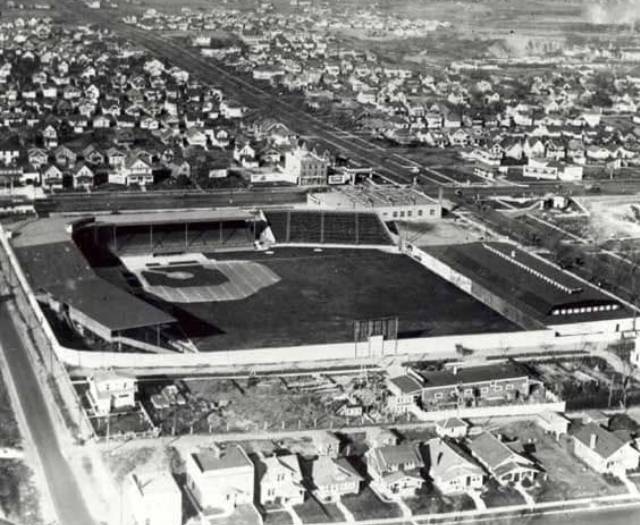
Lexington Park
Edward Smith built Lexington Park in 1897 so Charles Comiskey's Saints could finally play legal Sunday baseball; two grandstand fires and a steel rebuild later, it anchored the team for six decades.
 Minnesota Then
The latest stories from Minnesota's past, researched and written by Matt Reicher.
Edward Smith built Lexington Park in 1897 so Charles Comiskey's Saints could finally play legal Sunday baseball; two grandstand fires and a steel rebuild later, it anchored the team for six decades.
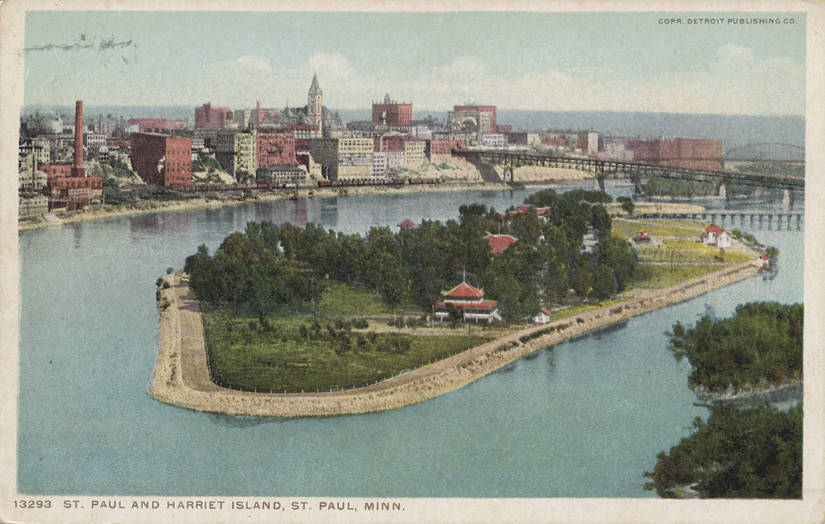
From sacred Dakota land Wakan Wita to Dr. Justus Ohage's 1900 public health vision: how Harriet Island evolved from spiritual crossroads to St. Paul's premier event space.
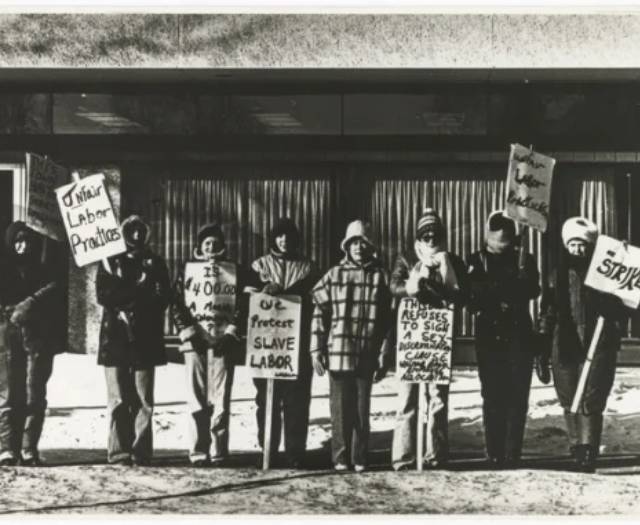
In 1977, eight women walked out of Citizens National Bank in Willmar to fight for equal pay. Their 22-month strike through two brutal winters helped reshape Minnesota's pay equity laws.
How Saint Paul overcame Cathedral Hill's treacherous 16% grade by building a 1,472-foot streetcar tunnel in 1907.
St. Paul spent $1.83 million to shut down the Faust Theatre, The Flick, and the Belmont Club—ending a decade of vice at University & Dale.
A fake emergency call lured 27-year-old Patrolman James Sackett into a deadly ambush on Hague Avenue. The murder remained unsolved for 34 years.
After the 1881 fire, Minnesota's second capitol opened in 1883. Criticized for design flaws, it served until 1905 and was razed in 1938.
A sensational 1952 police raid exposed John's Bar as the Minneapolis hub of an interstate prostitution ring—triggering Mann Act prosecutions.
The stylish St. Paul gangster who brokered peace under the O'Connor Layover Agreement—until a car bomb ended his reign.