 Minnesota Then
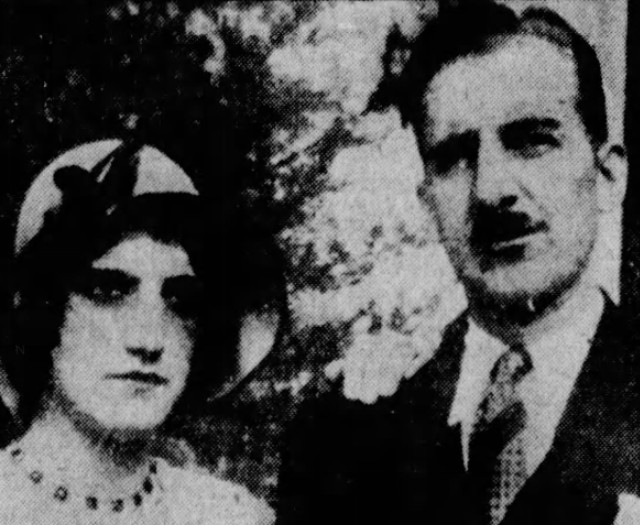
On Friday, December 16, 1932, twenty-nine-year-old St. Paul resident Oscar Erickson's luck was finally making a turn for the better. After being unemployed for many months due to a bout with appendicitis, the former cook was finally returning to work. He'd taken a job selling door-to-door Christmas wreaths for a local florist and optimistically believed it was a small step in the right direction for him and his wife, Delvina.
Loading wreaths into the trunk of his car, Erickson and his boss, Arthur Zachman, set out to knock on doors in the Como Park neighborhood, hoping to capitalize on holiday spirit. Unfortunately, after talking to the first couple of residents, the two men realized that a different salesperson had already canvassed the area. Erickson and Zachman packed themselves into the car and drove to a nearby area adjoining the Minnesota State Fairgrounds, still determined to make their quota.
A short distance away, the notorious Barker-Karpis Gang was executing one of the bloodiest robberies in Minneapolis history. Around 2:30 p.m., five or six robbers entered the Third Northwestern National Bank at Central and East Hennepin Avenues, brandishing pistols and a machine gun. As they emptied the vault of approximately $22,000 in cash and $100,000 in securities, a teller managed to trip the silent alarm.
Officers Ira Evans and Leo Gorski raced to the scene. As they exited their patrol car, the robbers opened fire from just 15 feet away. Lawrence Devol, the gang's lookout, riddled the patrol car with machine gun fire. Evans was struck by ten slugs and slumped over the wheel; Gorski stumbled out and collapsed on the street. Both were rushed to the hospital—Evans died almost immediately, while Gorski clung to life for two more days.
The robbers fled in their green Lincoln, but as they drove along Larpenteur Avenue, a tire shot during the gunfight went flat. At Snelling Avenue, the tire fell off completely, forcing them to limp into Como Park on the rim. They pulled in near the Como Zoo area, where a second getaway car was waiting.
Before Erickson's arrival, Mrs. Winifred Williams, who lived nearby, stopped to ask if she could help and was told to leave. Moments later, Erickson and Zachman, unaware of the robbery, drove through the park just as the gang was transferring their loot. Erickson slowed slightly as he passed the well-dressed men, either out of curiosity or caution. Later statements indicate that gang member Fred Barker, believing the car was trying to record their license plate numbers, shouted, "Get going, or else!" and fired several times, striking Erickson in the head.
Zachman took control of the wheel and drove the bleeding, unconscious Erickson to the St. Anthony Park police station at University Avenue and St. Albans Street. From there, a police ambulance rushed him to Ancker Hospital. He died in the early hours of December 17 without regaining consciousness, with Delvina at his side. He was buried at Roselawn Cemetery.
His grief-stricken wife told reporters she had learned her husband was dying while talking with a friend about his Christmas gift. Delvina Erickson spoke about the financial struggles the couple had faced in their two-year marriage, including the mounting doctor bills from her husband's recent bout with appendicitis. She described her husband's happiness at landing the new job and his belief that their bad luck was finally turning around.
Barker, who would lose his life in a shootout with FBI agents in rural Florida in early 1935, never had to answer for the murder. He didn't kill a competing gangster or a lawman trying to stop him—he cruelly murdered a man whose only crime was driving past the scene at the wrong moment.
Oscar Erickson's death became a symbol of a system that had lost control. Police Chief John O'Connor's Layover Agreement, which had once protected criminals in St. Paul, was crumbling by 1932. The brutal killing of two officers and an innocent civilian in a single afternoon proved the system was failing. Citizens who had once confidently walked alongside public enemies began to fear for their safety. Something had to change.
After her husband's death, Delvina Erickson moved in with a sister in Minneapolis while she looked for a job as a telephone operator.