 Minnesota Then
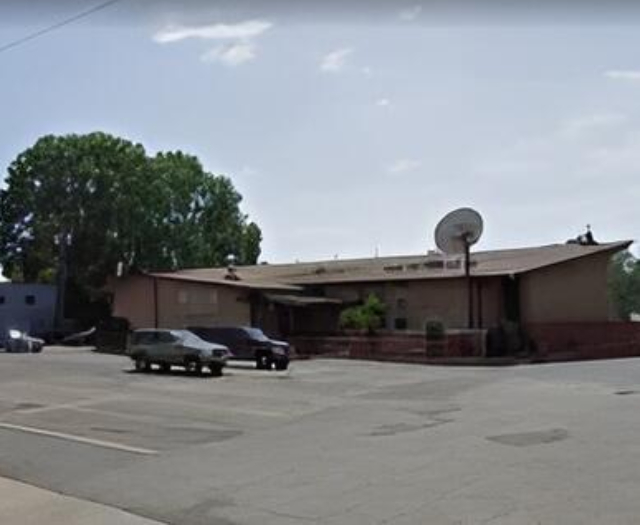
Gramma B's opened for business at 1900 Marshall St NE in Northeast Minneapolis in December 1979. To open his own place, its owner, 31-year-old Tony Benincasa, sold his stake in Goofy's, a bar near downtown Minneapolis. Its history showed an immensely popular, albeit rough place, loved by a rowdy bar crowd and reviled by the surrounding neighborhood.
Much like Goofy's, Gramma B's was a busy bar that catered to local softball players—at least initially. In 1980 Benincasa sponsored dozens of teams throughout the metro area, hoping they'd make his bar their post-game destination. For the most part, it worked. Gramma B's became a hotspot soon after opening, and on many nights boasted a packed parking lot and cars lined up and down Marshall. The place was consistently busy, so much so that some nights required closing the doors to curtail overcrowding.
The building had a notable history before becoming Gramma B's. Constructed in 1968 as the Fraternal Order of Eagles No. 1247 lodge, the two-story structure was converted into a bar and restaurant space. Gramma B's operated under a Class A on-sale liquor license, offering adult entertainment, live bands, and dancing. Despite its large capacity, the bar always seemed packed, with a main bar upstairs near a dance floor and stage, while downstairs featured pool tables, foosball, and a jukebox.
It was a rough-edged "booze and boogie" bar seen as Northeast's answer to the Cabooze, a spot for hard-working, blue-collar people of the area to come, have a few drinks, and listen to live music. During the day, people came to Gramma B's to eat lunch; at night, a decidedly younger crowd made their way into the bar. A live band usually played rock-n-roll upstairs, creating a dual-level party atmosphere.
Things turned rowdy quickly. Gramma B's developed a reputation as a biker hangout, which eventually forced management to enact a strict "no colors" policy prohibiting motorcycle club affiliations. Anyone with a problem with the dress code ended up meeting the bar's security staff.
Keeping that rough clientele in line required an unusual crew of bouncers. Gramma B's employed a group of behemoths who would go on to become some of the country's most famous professional wrestlers of the 1980s and '90s. Eddie Sharkey, a former AWA wrestler turned bartender and trainer, noticed the talent among the bar's security and began training them, helping launch careers that included (Ravishing) Rick Rude, Hawk and Animal of the Road Warriors, John Nord (The Berzerker), Scott Simpson (Nikita Koloff), and Barry Darsow (Smash from Demolition).
Sharkey's work out of Minneapolis—including training in a church basement before establishing Pro Wrestling America—played a key role in shaping the powerhouse style that dominated professional wrestling in that era. The bar even hosted occasional "wrestling nights" where local talent performed exhibition matches, drawing crowds that packed the venue.
The craziness inside the bar occasionally spilled out into the nearby neighborhoods. During its four years of operation, Gramma B's generated the highest number of police calls for any bar in Minneapolis's Second Precinct, with complaints including thefts, assaults, automobile damage, and parking problems—details noted in later city licensing and legal records. The incidents weren't just noise complaints; court records detail specific events: a stabbing in the parking lot in 1982, multiple violent assaults inside the bar, and regular fights that required police intervention. One officer testified that on Friday and Saturday nights, patrol cars were stationed outside Gramma B's as a preventive measure, something unheard of for other bars in the precinct.
By September 1984, tax debts had forced Gramma B's out of business. Benincasa's parents attempted to reopen the space as Anton's in November 1984, but faced fierce opposition. They applied for a Class B liquor license to add dancing and banquet facilities, presenting a petition with over 500 signatures to the city council. However, the Minneapolis Heritage Preservation Commission and neighborhood residents testified against the plan, citing Gramma B's history of disturbances. The council denied the license, finding that "a Class B license would not be compatible with the surrounding residential area" and would "greatly increase the likelihood of late night activity which would disturb residents." The ruling effectively created a two-year moratorium on Class B licenses at that address, making it one of the few locations in Minneapolis where a bar's history prevented future liquor licenses.
Gabby's Saloon & Eatery opened at the location in 1986, eventually becoming Psycho Suzi's Motor Lounge in 2010, which occupied the space until August 2023.